The Gaganyaan Story

A glimpse into India’s ambitious new human spaceflight programme — the journey so far, the road ahead

Published: December 10, 2025
‘Gaganyaan’ is the name of the Indian Space Research Organisation mission to place a three-member crew of Indian astronauts in a 400 km orbit around the earth. The astronauts will spend about three days there before returning to Indian waters when the mission ends.

The total allocation for the project so far is over ₹20,000 crore.

ISRO has said safety will come first.

To secure the lives of the astronauts and other mission members during spaceflight, ISRO is upgrading the equipment that will take them to orbit and bring them back.


3D model loading, please wait
Grab and move the rocket!

Ahead of the first crewed flight, ISRO is conducting hundreds of tests.

Gaganyaan involves the following components:

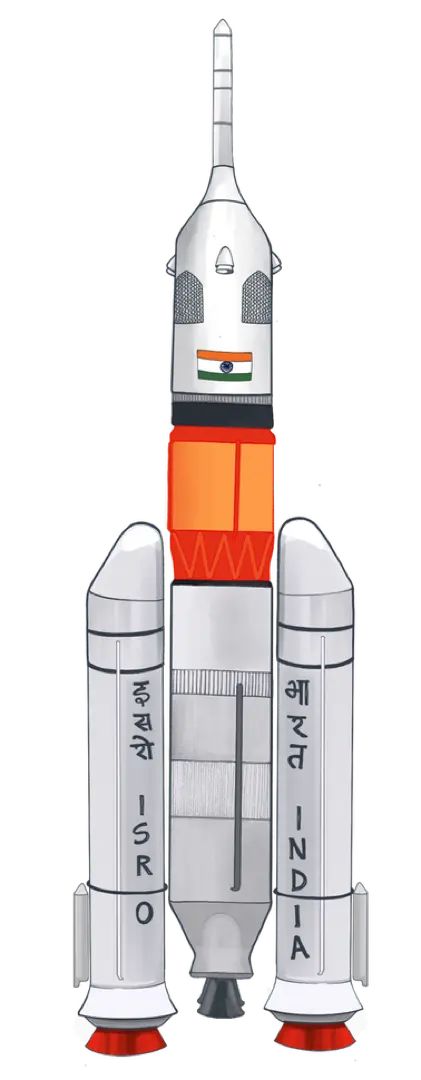
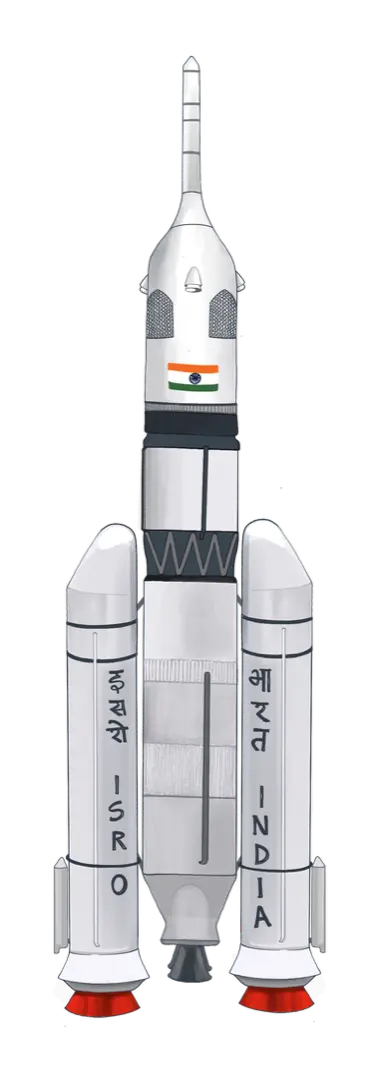
Human-rated LVM3 (HLVM3)

  • The three-stage launch vehicle that has to be certified to have a 1/2,000 failure probability or lower.

  • The rocket's first stage is powered by a pair of S200 boosters using solid fuel; the second stage is powered by two Vikas engines using liquid fuel.

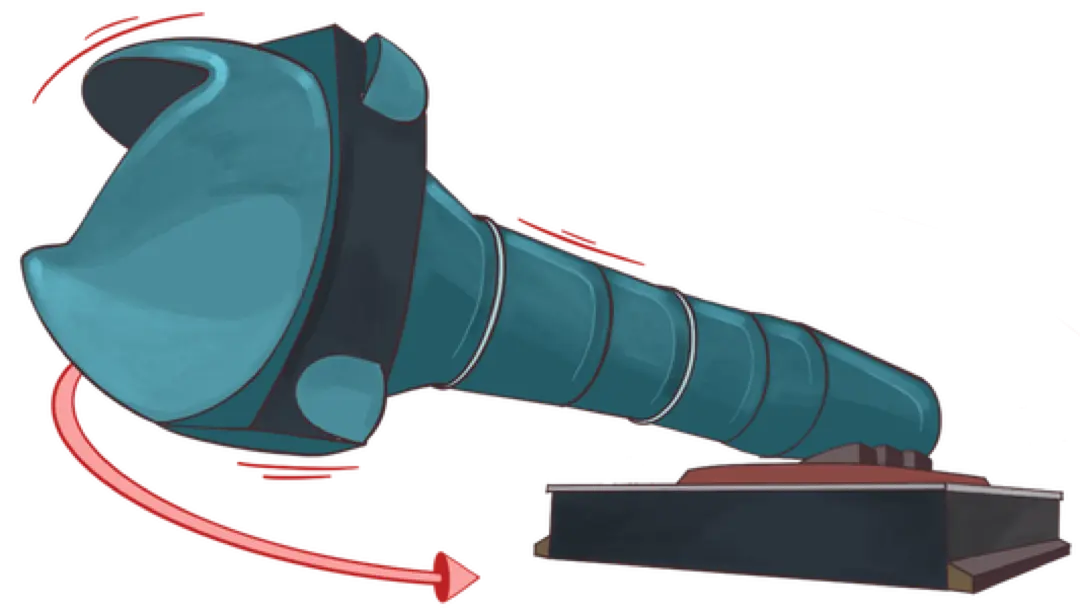
  • The third stage is powered by a single CE20 cryogenic engine powered by liquid hydrogen and liquid oxygen.

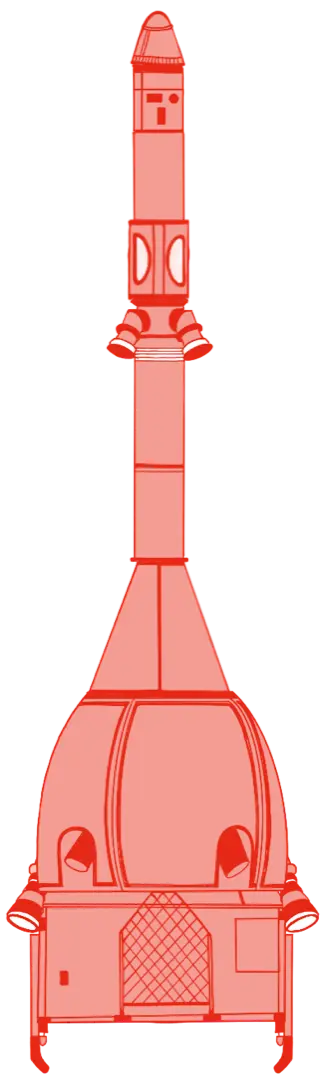
Crew module

  • A pressurised eight-tonne habitat providing 0.8 atm, 22° C, and 45% relative humidity for the astronauts it will carry

  • The module itself weighs 5.3 tonnes and will include environmental control and life support systems (ECLSS)

  • During the final phase of the Gaganyaan mission, the module will use parachutes to reduce its speed from over 200 m/s to just over 10 m/s for a safe splashdown

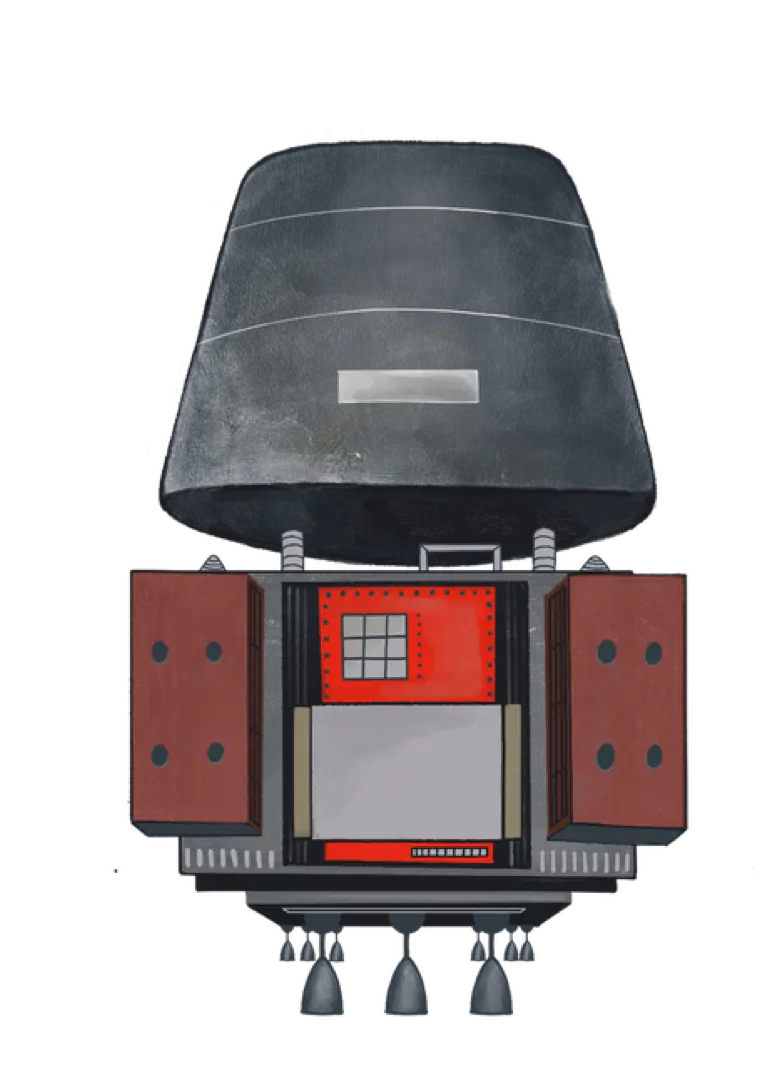
Service module

  • The crew module and the service module when mated become the orbital module; the service module alone weighs 2.9 tonnes

  • The service module is an unpressurised bus carrying propulsion, power, thermal radiators, and water and oxygen tanks

  • It will jettison before 120 km altitude during reentry

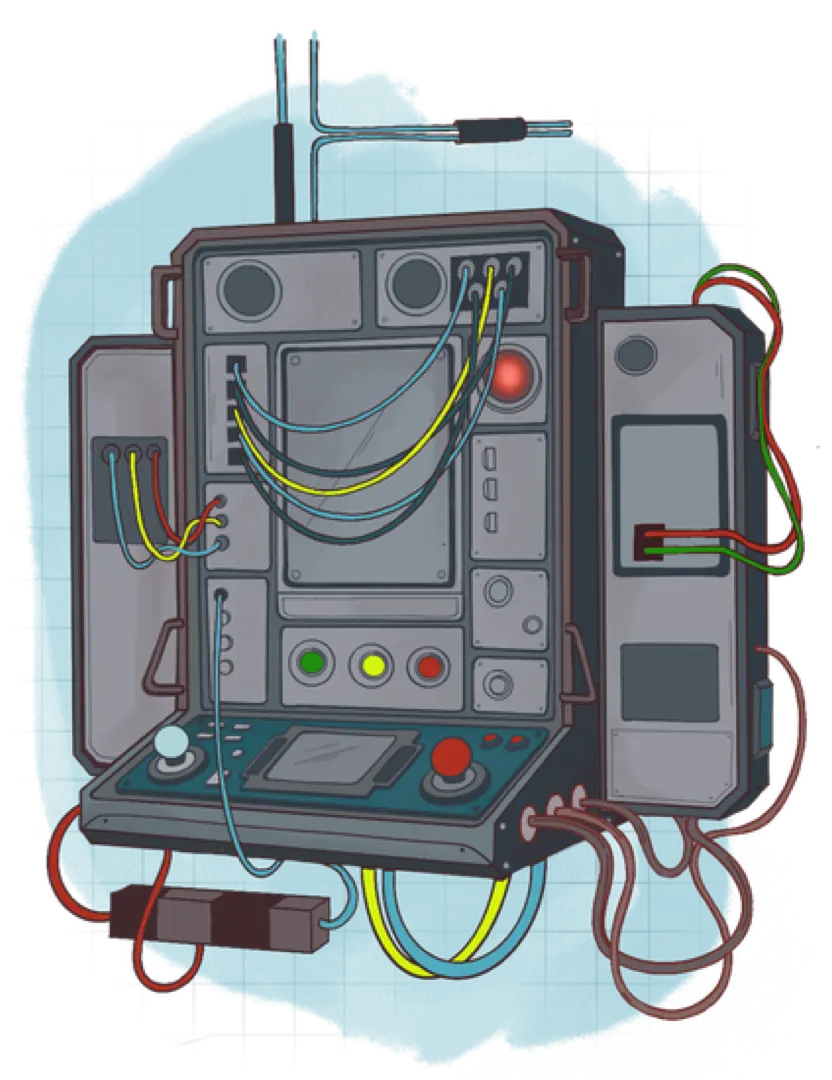
Environmental control and life support system (ECLSS)

  • Maintains a breathable atmosphere, removes carbon dioxide and trace contaminants, controls humidity, and handles waste

  • "We wanted a lot of technology to come from outside, from Russia, Europe, and America. But many did not come. We only got some items. That is going to take time. So we have to develop systems such as environmental control and life support systems. We call it ‘ECLSS’. That has to be developed internally." — former ISRO chairman S. Somanath to The Hindu, October 2023

Crew training and recovery ecosystem

  • Responsible for selecting astronauts for a flight, providing neuro-vestibular conditioning, emergency egress drills, and post-flight rehabilitation

  • Among other facilities, the Institute of Aerospace Medicine will screen and shortlist candidates, and run medical, aeromedical, psychological, and physical tests; the Astronaut Training Facility will handle core training

  • The Water Survival Training Facility is running crew-module recovery trials and water-survival drills; among other things, the 'Gaganyaan Recovery Training Plan' specifies training for divers, MARCOS, parajumpers, medical specialists and technicians

Astronauts

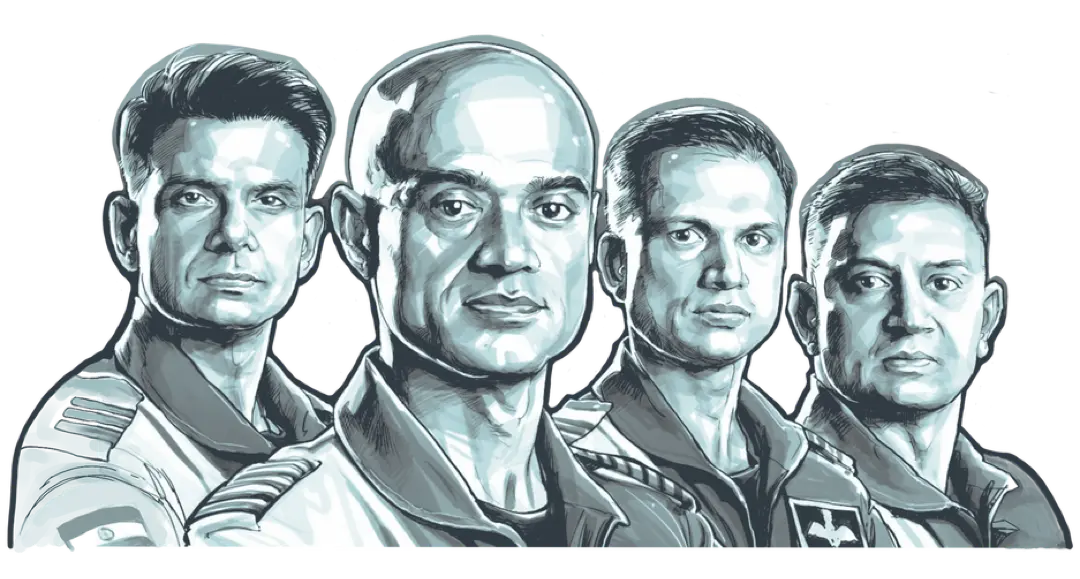
  • Wing Commander Shubhanshu Shukla, Group Captains Prasanth Balakrishnan Nair, Ajit Krishnan and Angad Pratap

  • Mr. Shukla and Mr. Nair participated in the Axiom-4 mission to the International Space Station, conducted by NASA and Axiom Space

  • Both men trained at NASA facilities; for Axiom-4, Mr. Nair was part of the backup crew while Mr. Shukla served as the mission pilot

Here are some important tests and why they matter

Integrated air-drop test (IADT)

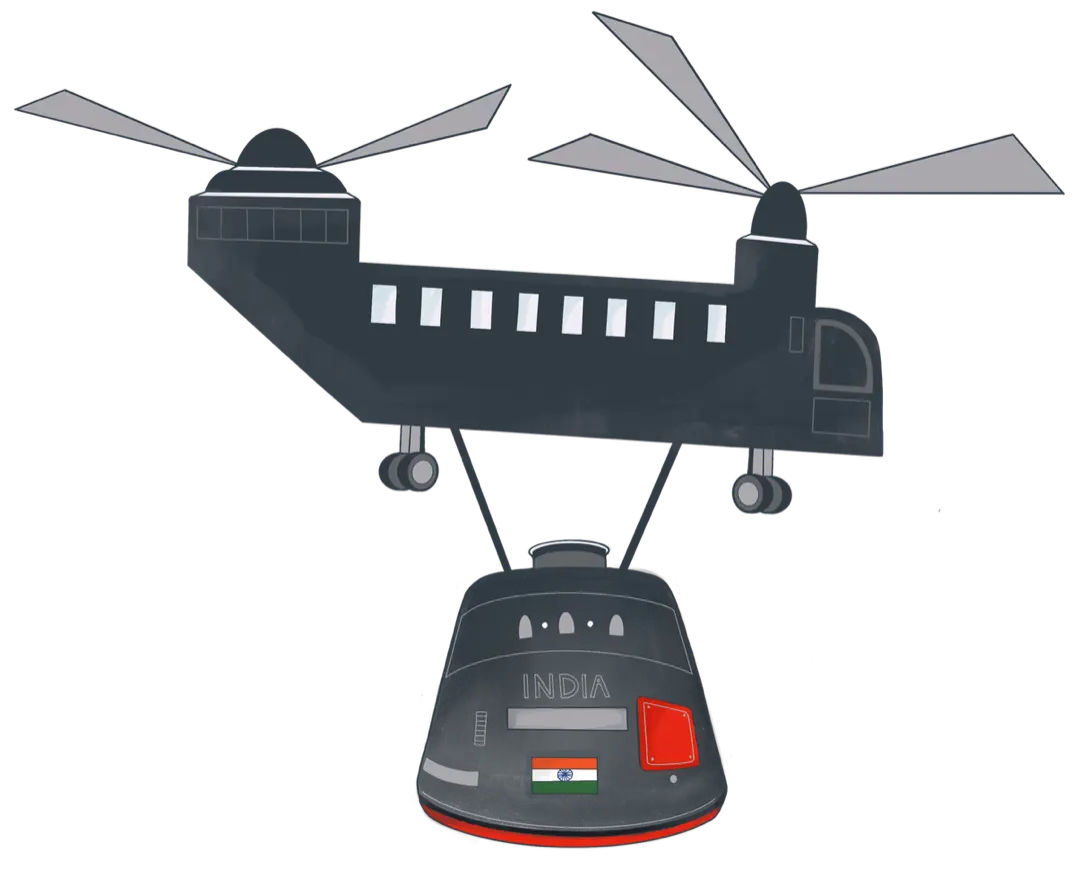
A full-scale model of the crew module, or a simulator of similar mass, is dropped from a helicopter, usually from around 2.5 km or up.

This test verifies structural integrity, parachute performance, and recovery readiness. In one test, an IAF IL-76 aircraft dropped a full-scale module from 4.5 km altitude before pyros fired sequentially on the module to deploy the ribbon drogues, the reefed mains, and finally the full parachute canopies. Further IADTs were scheduled from 2024 onward, but weather and aircraft-availability issues resulted in their postponement. The August 24, 2025, IADT was a success.

The goal is to test how well the parachute system deploys and brings the module safely to the ground. During these trials, engineers are measuring the line tension, the canopy pressure, and the descent-rate telemetry, among others.

Service module propulsion system (SMPS)

The SMPS provides five 440-N liquid apogee motors (LAM) plus 16 100-N reaction control system (RCS) thrusters to help the crew insert the crew capsule into earth orbit, to deorbit once the mission is complete, and to help the crew during emergencies.

The crew capsule will hold only three days’ worth of consumables. In the event of an off-nominal orbit or engine underperformance, say, the astronauts may not have time for ground control to improvise a solution. If the SMPS is good to go, the astronauts will have the means to safely deorbit.

ISRO has conducted short-duration hot-fire tests, of 30 seconds and 100 seconds, at the IPRC-Mahendragiri facility and has validated simultaneous LAM and RCS operation under flight-like pressures and temperatures. In future, ISRO is planning a 350-second full-duration burn to simulate the longest continuous impulse required for the crew capsule for safe reentry.

The clustered engines must be able to restart reliably after multiple thermal cycles, which is a situation that satellite apogee motors rarely face.

HLVM3 cryogenic stage restart

So far ISRO has tested the CE-20 engine of the C25 upper stage at its Mahendragiri facility: the engine was fired for 720 seconds, then it was cooled down, and finally it was made to ignite a second time.

Why? Unlike in satellite launches, a Gaganyaan crewed mission will need the human-rated LVM3 rocket to be able to reignite its C25 cryogenic upper stage if the first burn underperforms.

Crew escape system (CES) and test vehicle demonstrations

CES is a safety mechanism designed to save the astronauts’ lives if something goes wrong during launch.

The first of these tests was the pad-abort test (PAT). ISRO also has successive test-vehicle flights (TV-D1, TV-D2, etc.) where it will mount a prototype crew module plus a full CES atop a single-stage liquid rocket, and deliberately cause them to be ejected at Mach 1.2-1.5 and at higher and higher altitudes. In each test, engineers will quantify the acceleration, the tumbling rates, and parachute line loads, among others.

These tests are important because the reliability of the escape stack is non-negotiable for a human-rated mission. Both NASA and Roscosmos have lost crews in launch abort failures before such systems were refined.

TV-D1

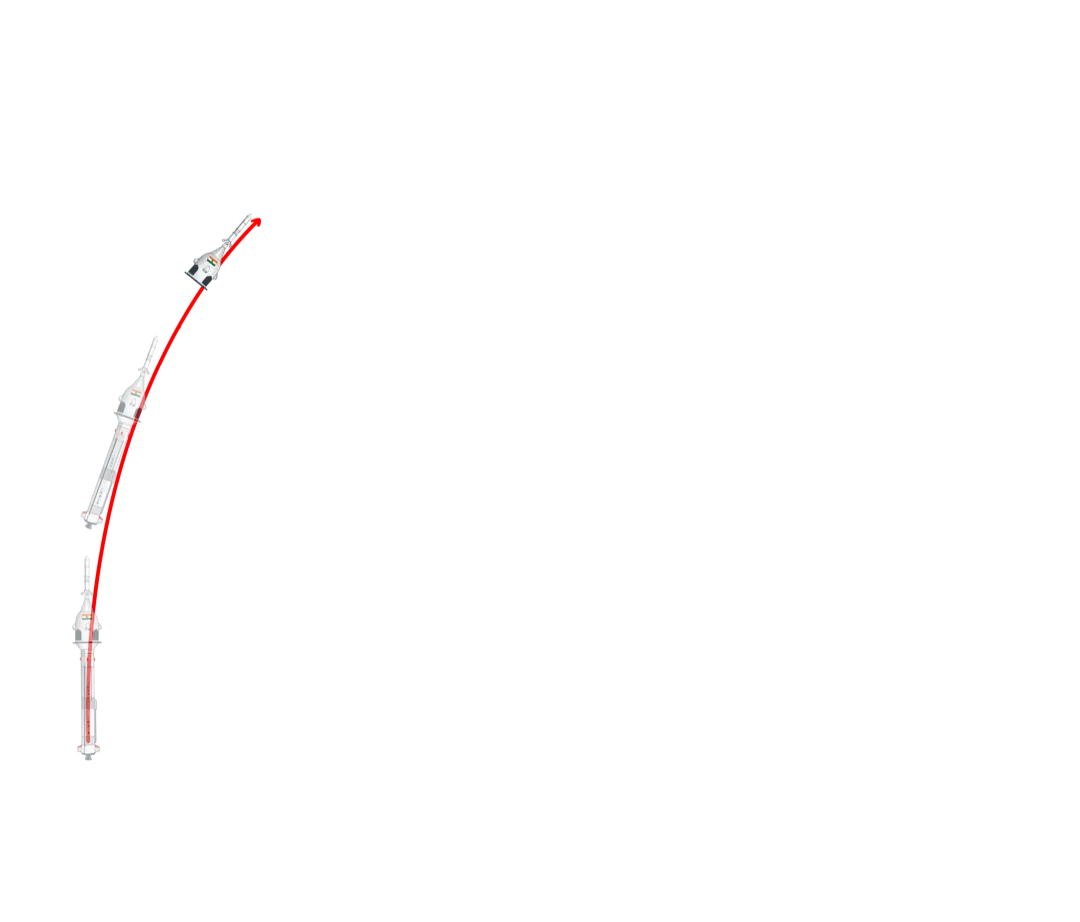
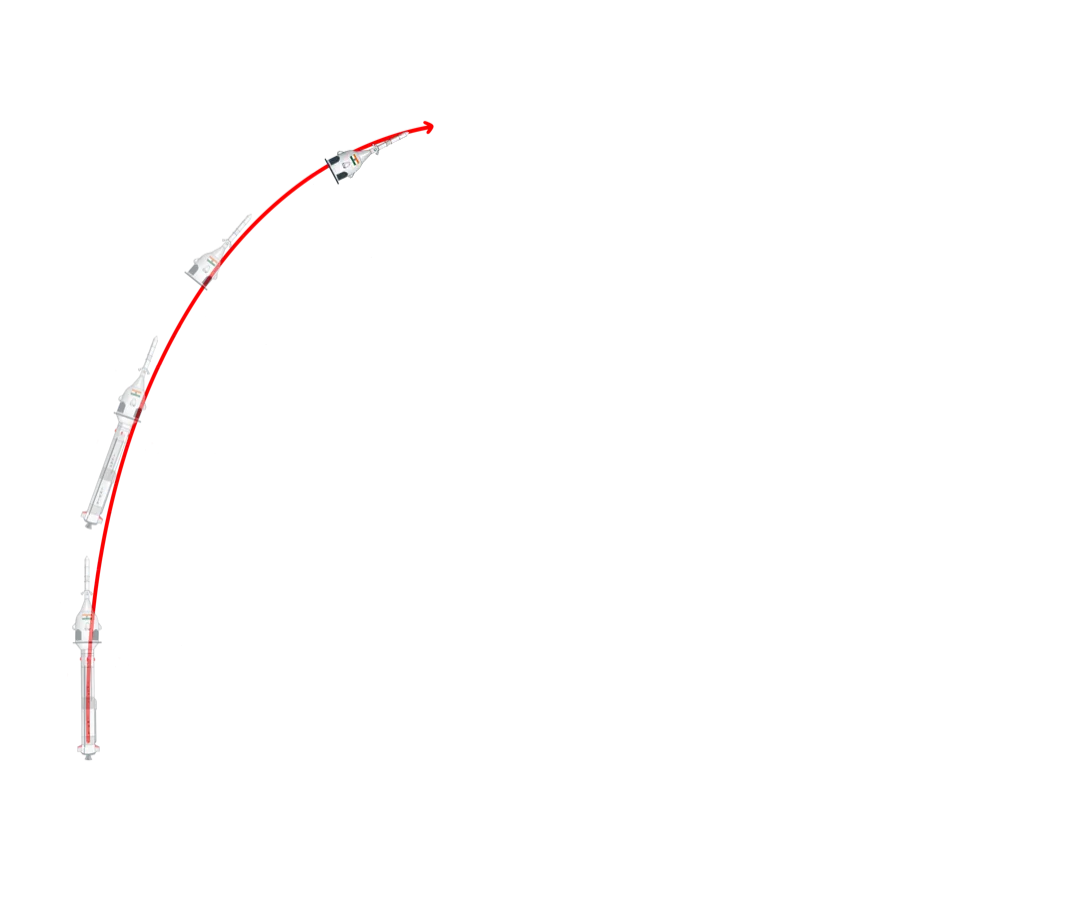
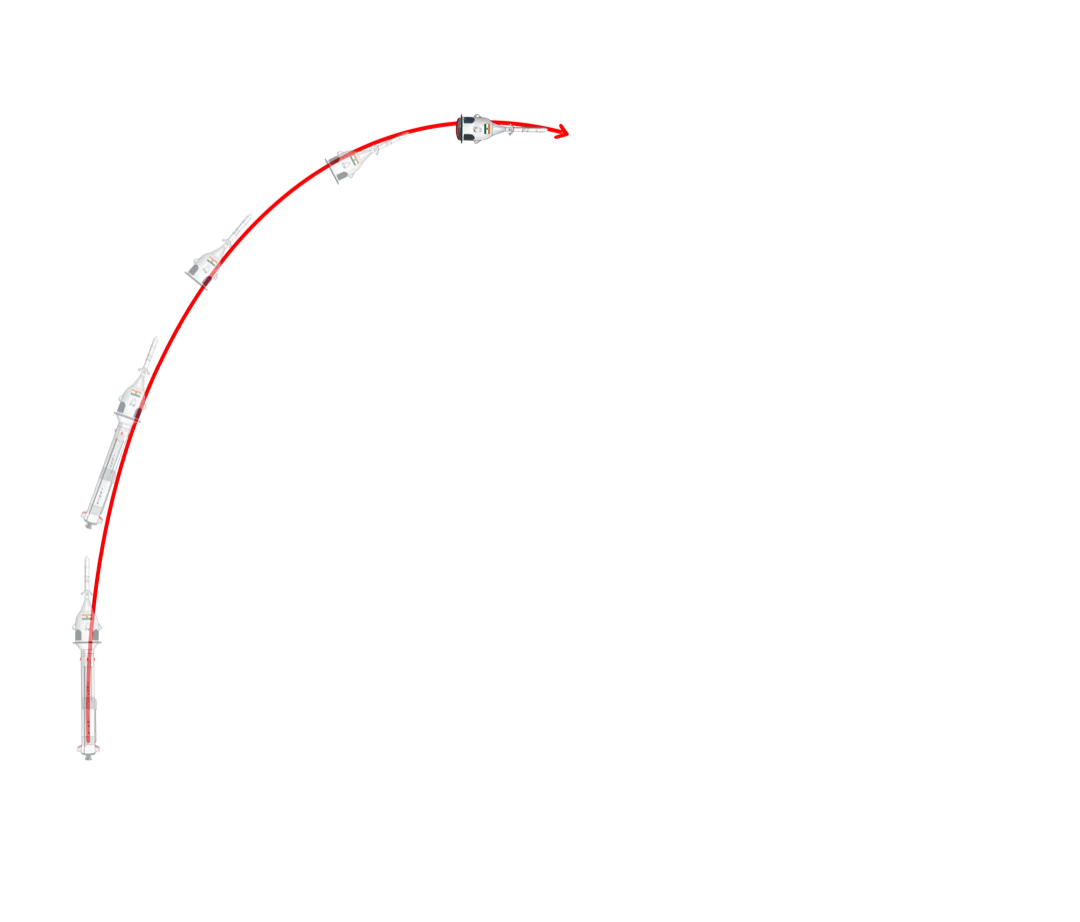
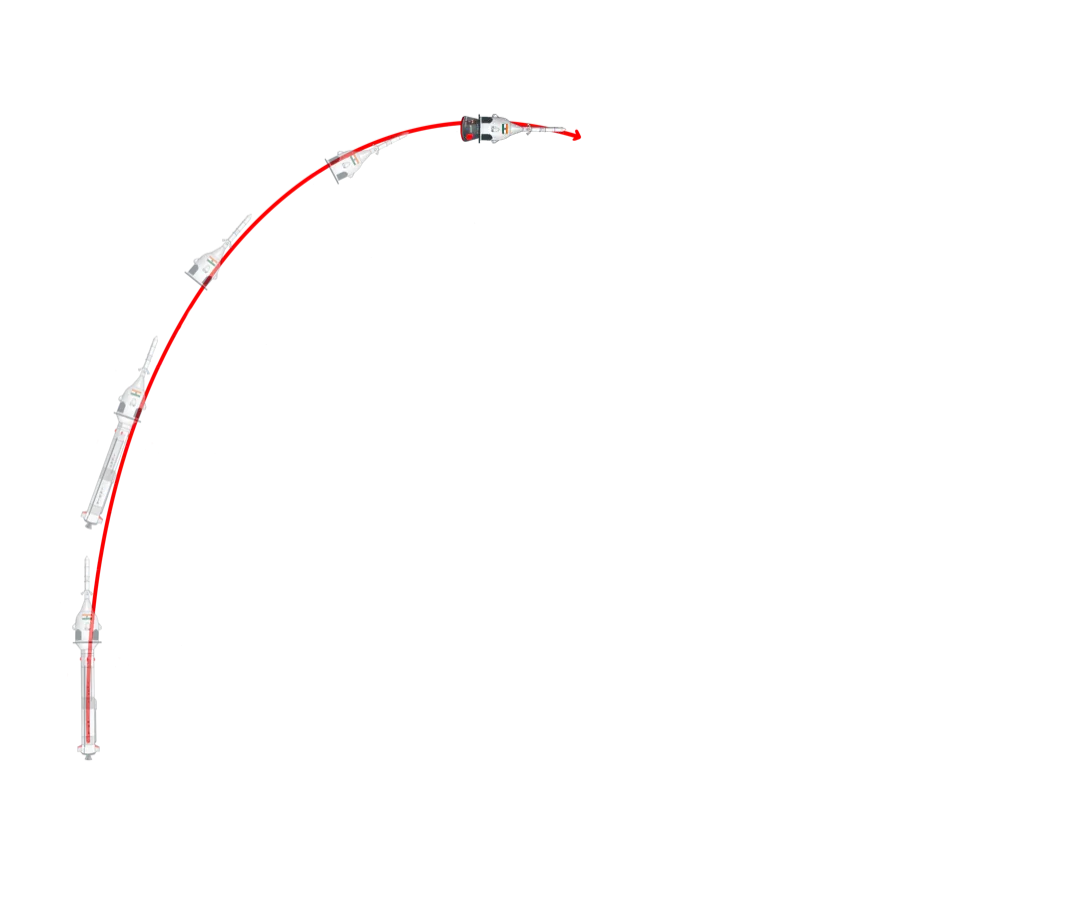
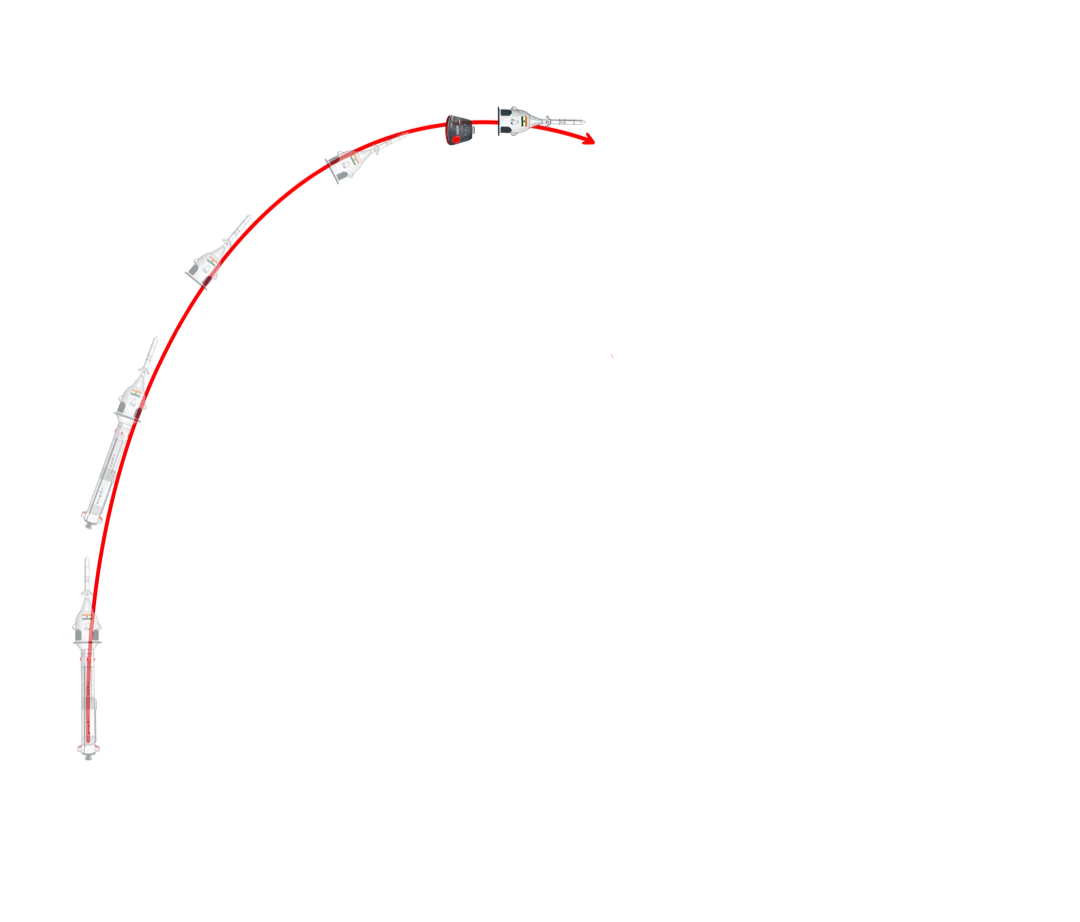
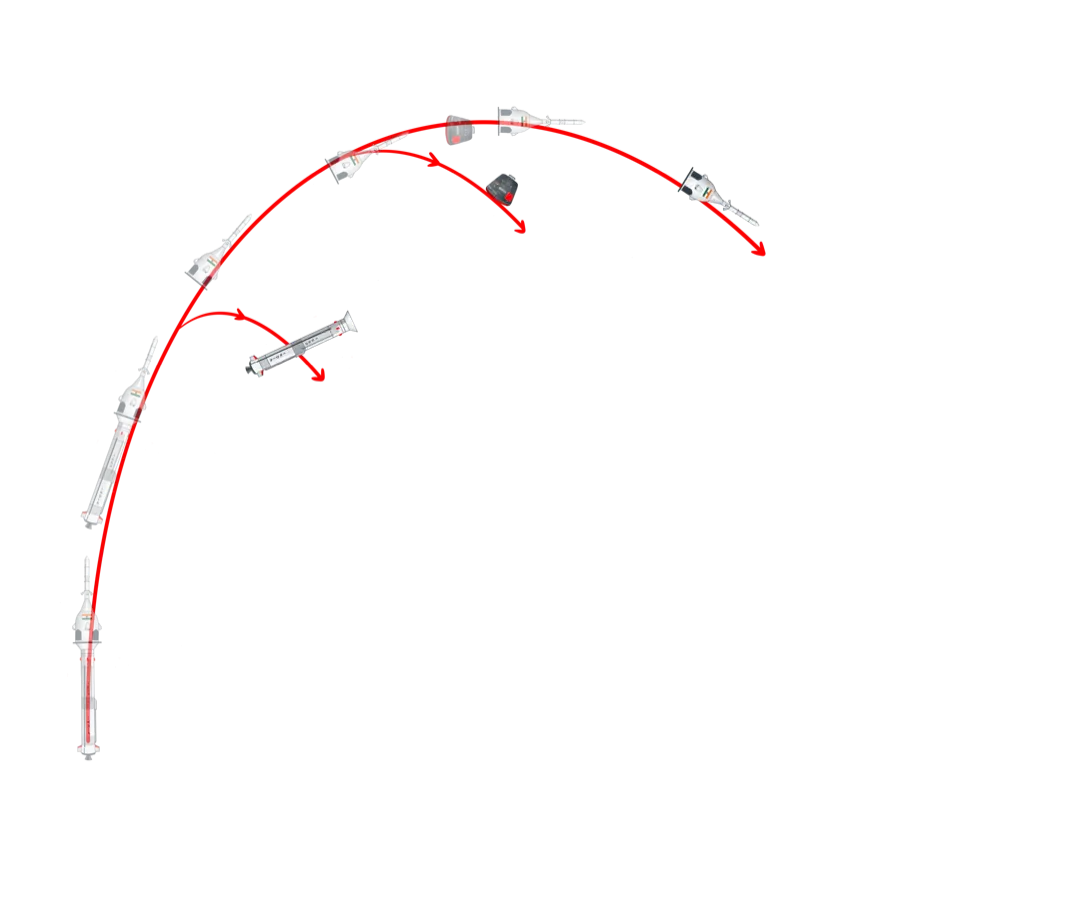
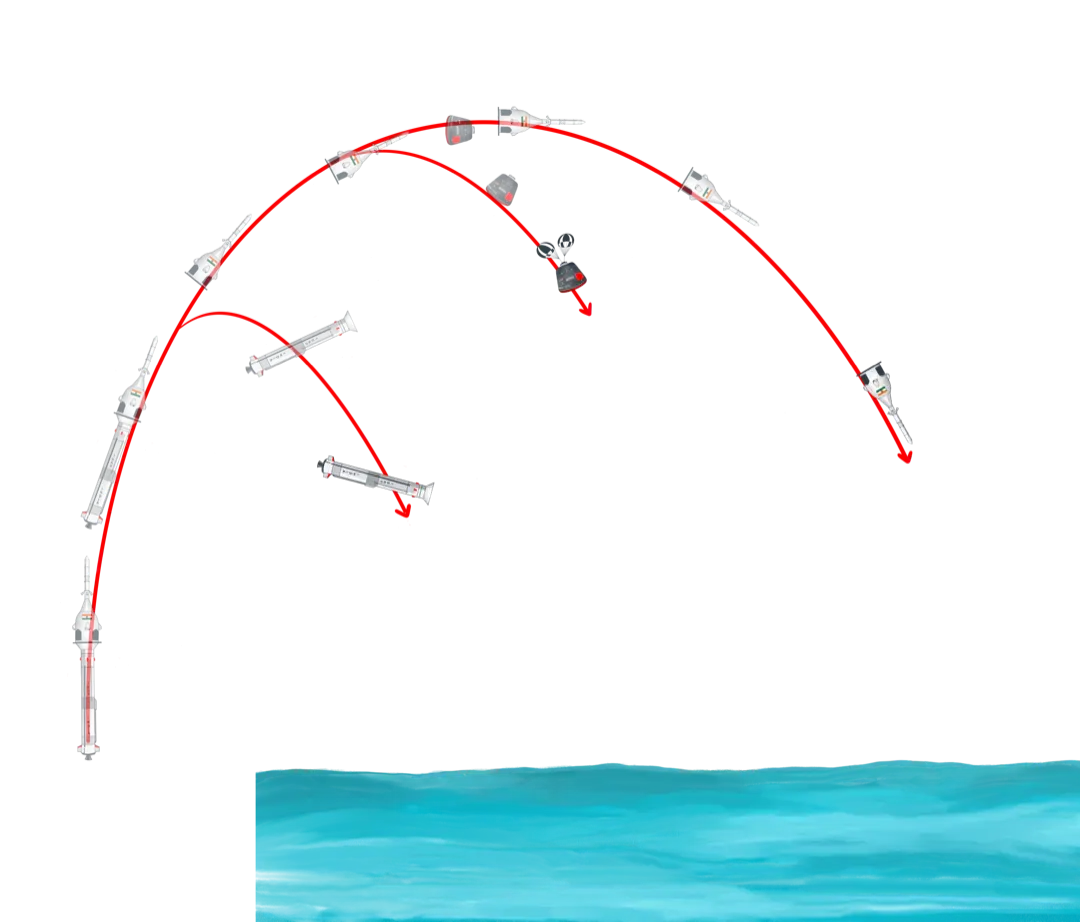
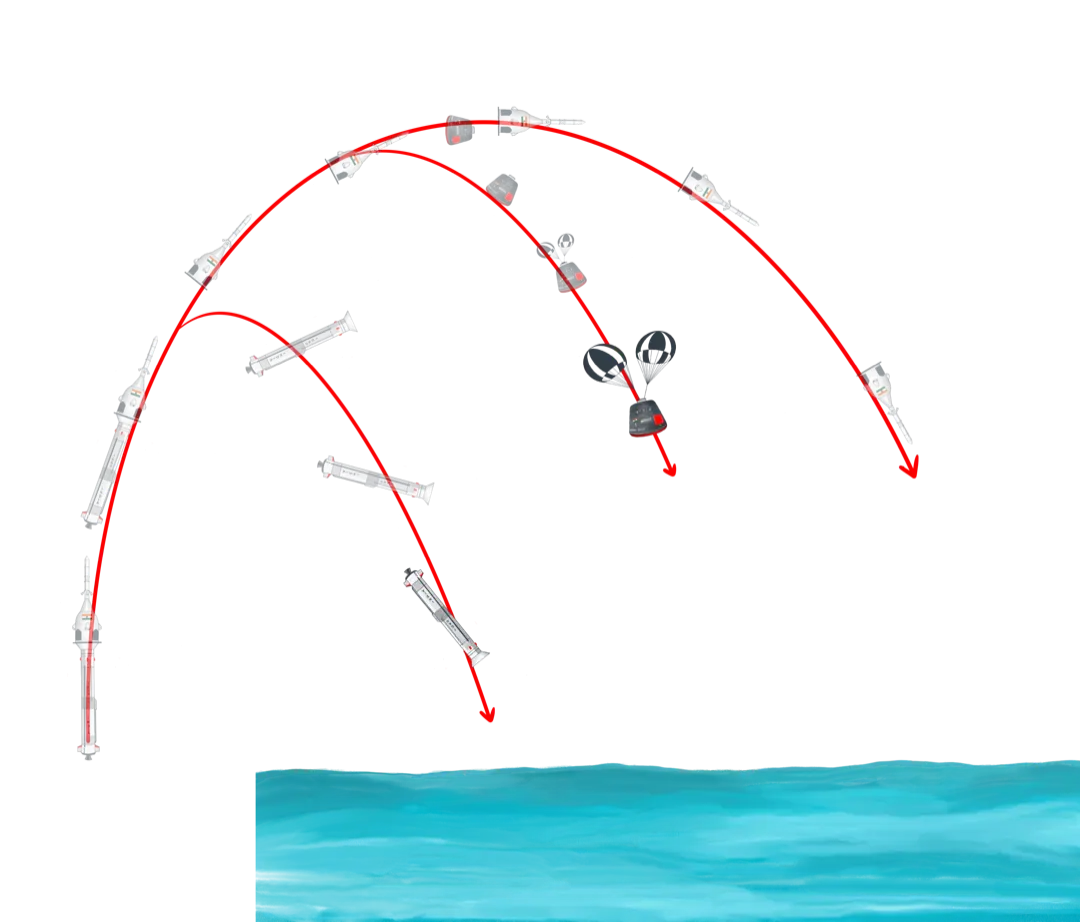
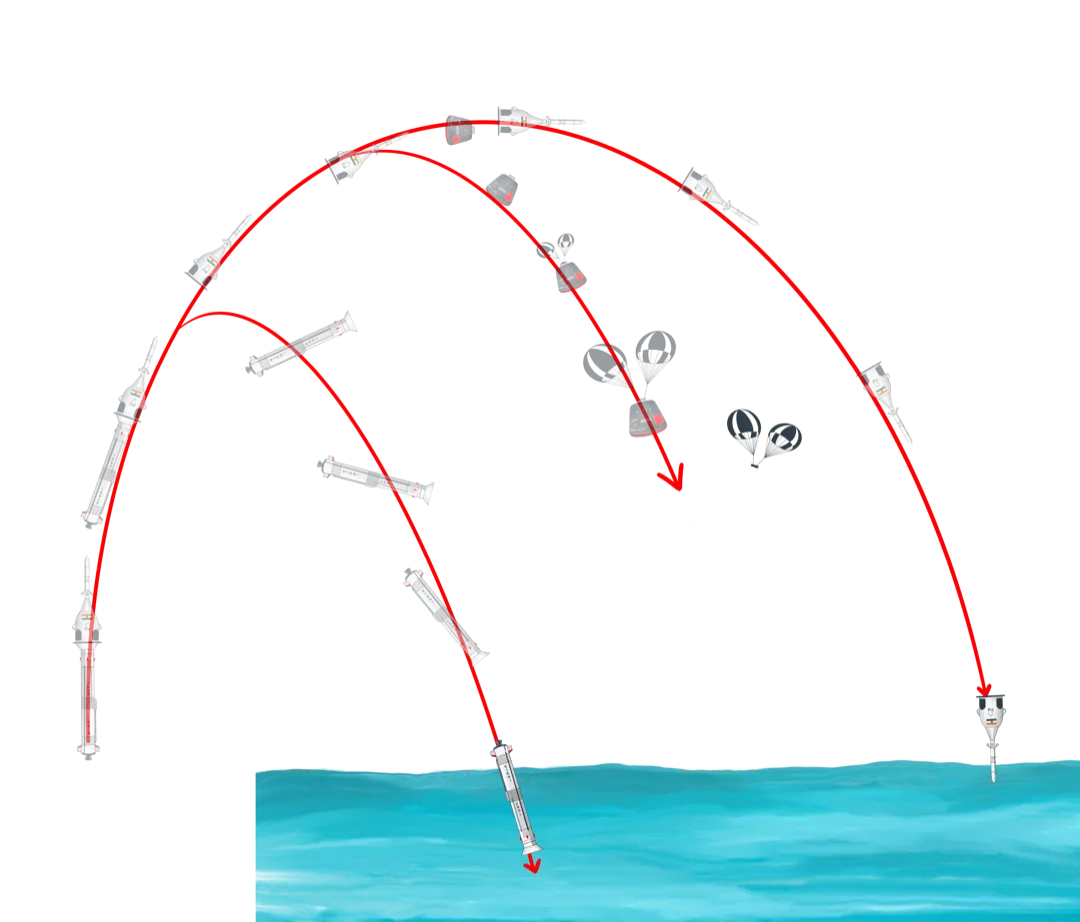
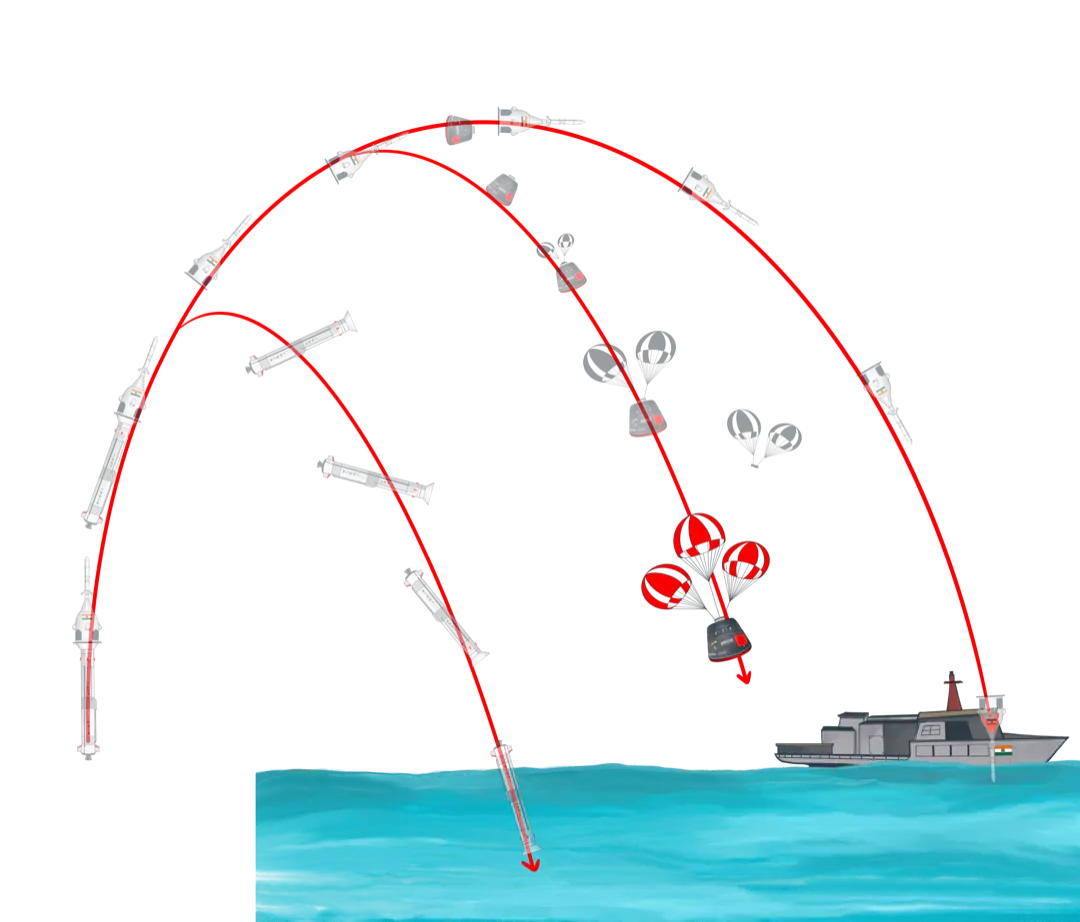
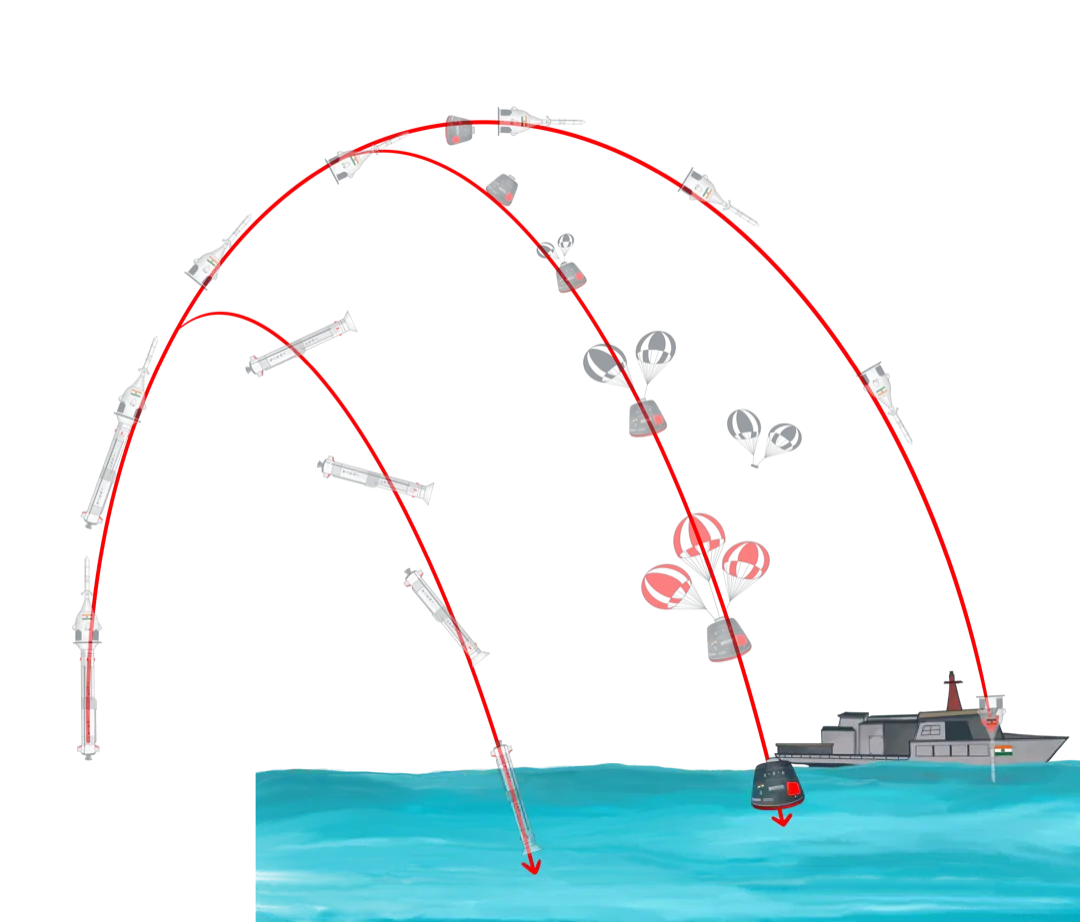
On October 21, 2023, ISRO conducted the Test Vehicle Demonstration-1 (TV-D1). The mission tested the CES using a non-pressurised crew module (basically a dummy capsule without astronauts), to study how it behaves during escape and descent.

The escape system separated from the rocket about 11 seconds after liftoff, carried the crew module to a safe altitude, and then both descended into the sea with parachutes. The Indian Navy successfully recovered the module from the Bay of Bengal.

TV-D1 flight profile

The CES, the IADT, and the water recovery systems together protect the crew across the abort, descent, and post-landing phases — statistically the riskiest parts of any human spaceflight mission.

End-to-end recovery

After atmospheric reentry, officials on the ground must quickly locate the capsule in the Bay of Bengal, stabilise it, and open its hatch.

The Water Survival Training Facility in Kochi can simulate sea state 4 conditions (waves of height 1.25-2.5 m), darkness, and helicopter downdraft.

Navy divers will rehearse tethering, winching, and capsule-righting using mock-ups.

Why?

TV-D1 was conducted to demonstrate in-flight that Gaganyaan's abort, escape, descent and recovery systems can safely protect and recover a crew, and to gather real data to qualify these systems before any human mission.

  • TV-D1 was an abort mission: it responded to a simulated emergency to show the CES could rapidly pull the crew module away from a failing rocket, follow a safe path, and hand over to parachutes

  • It validated the new test vehicle and flight environment by allowing ISRO to check guidance, propulsion, structural loads, and separation events in the exact part of the flight when an emergency would be most stressful

  • The (unpressurised) crew module ISRO used in the test had the same size and mass as the real one, and tested its ability to decelerate and be recovered at sea by the Indian Navy

  • The test 'de-risked' future crewed flights because ISRO needs to show both technically and politically that the escape system and recovery procedures work before the crew module carries humans

Personnel must be able to perform these tasks all within about an hour to avoid risking excessive CO2 buildup in the astronauts’ bodies.


How all the parts fit together

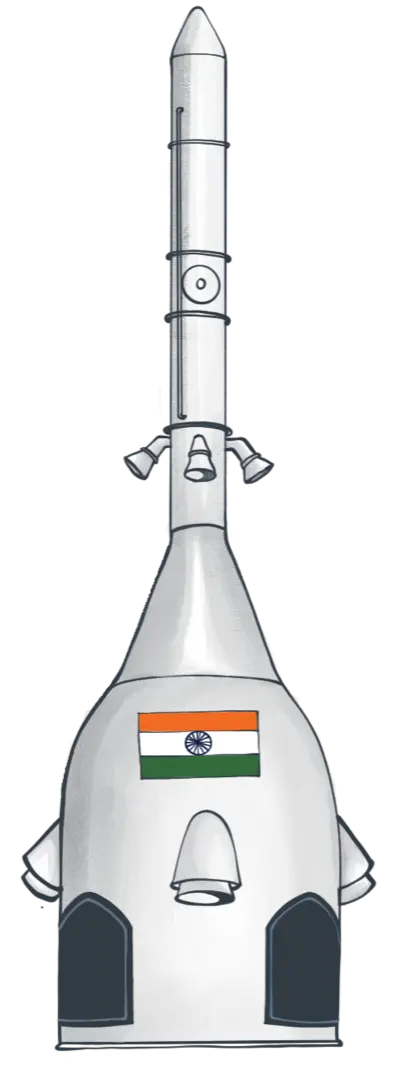
Full rocket

What's next?

  • ISRO’s next major tests are TV-D2 and G1; ISRO has said G1 will come first, currently expected in December 2025

  • During G1, a human-rated LVM3 rocket will place the orbital module in an elliptical orbit around the earth

  • During the module's third orbit, it will fire its onboard engines to change the shape of its orbit from elliptical to circular

  • The module will carry a humanoid robot named Vyommitra, which will be fitted with sensors and instruments to collect data during the mission

  • G1 will validate the rocket's ascent loads, crew module thermal shields, SMPS orbital manoeuvres, and autonomous guidance

Credits:

Reporting and writing: Mukunth V | Editing: Mukunth V | Interactive and Code: Areena Arora | Illustrations: Arundathi Rajan